Yoga when you're fasting.
It's not harder. It's different. Slower. More breathing than movement.
Fasting changes your body. Your energy dips in the afternoon, your hydration is lower, and your usual practice feels heavier. That's normal. The goal in Ramadan isn't to push harder — it's to maintain the habit without draining yourself.
When to practice
Not in the afternoon. Practice after suhoor (before dawn) when your body is fresh, or after iftar when you've eaten. Skip the three hours before iftar — that's when your blood sugar is lowest.
What to skip
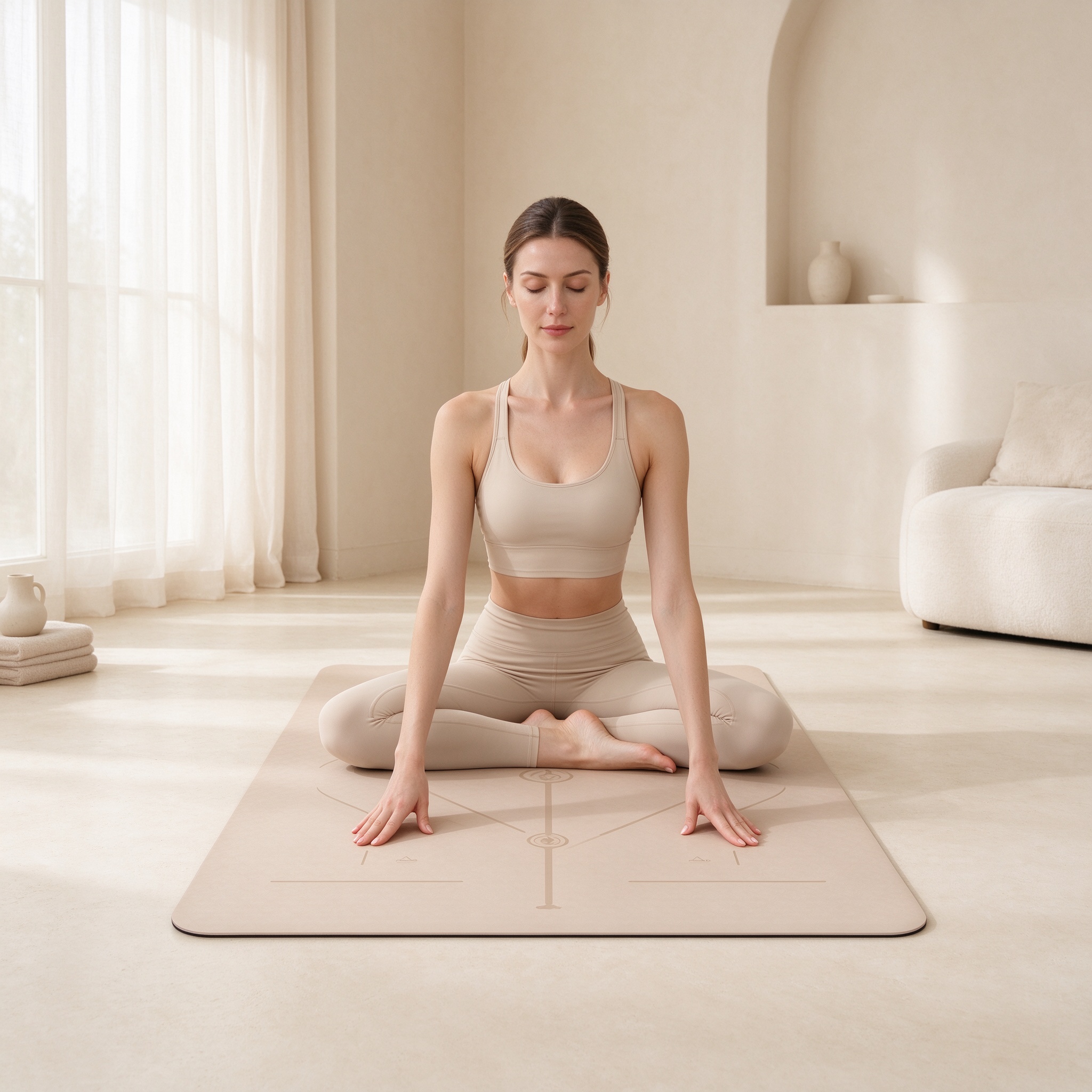
Skip hot classes. Skip deep backbends. Skip anything that makes you sweat heavily. Focus on gentle stretching, forward folds, and breathing. This is maintenance, not training.
Breathing is the practice
While fasting, your breath is shorter. Use that. Slow it down. Ujjayi breath — the oceanic breath — helps regulate your nervous system when you feel depleted. Five minutes of ujjayi equals thirty minutes of stretching.
Your Ramadan Practice
Shop the Collection